
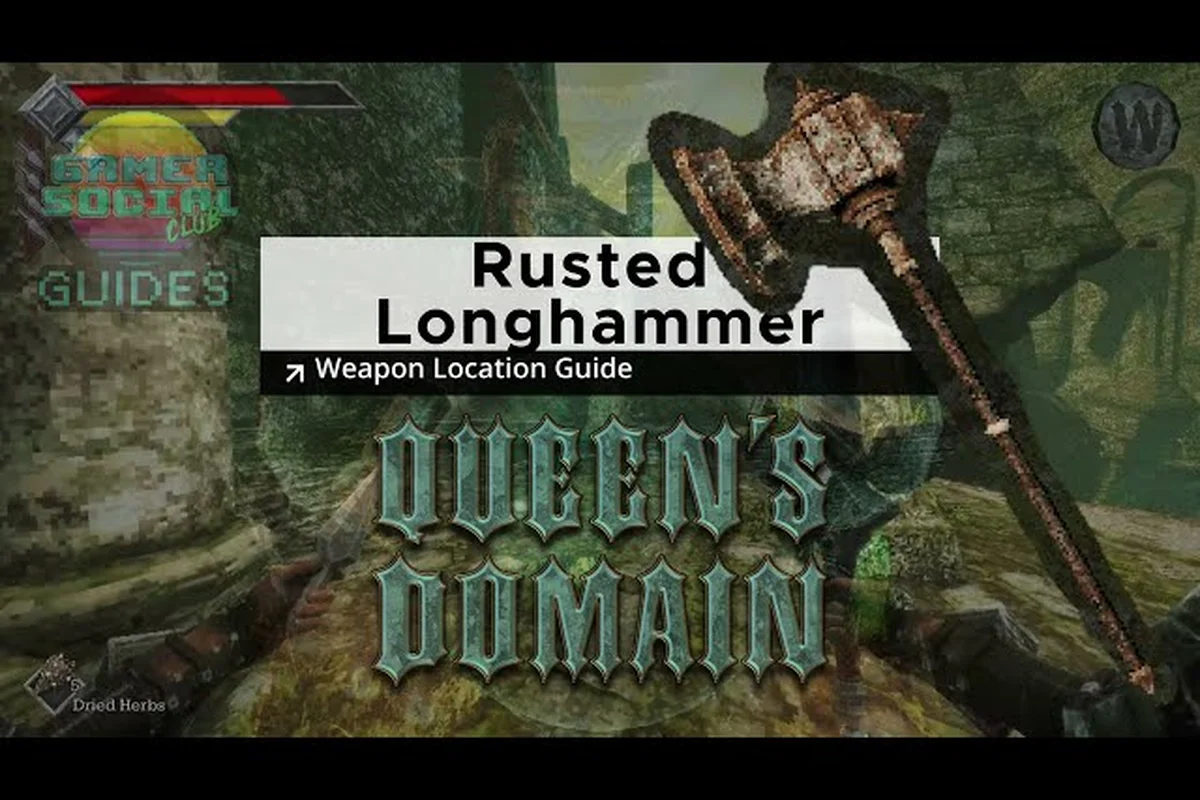
A strong Queens Domain loadout matters because it turns melee, throwing tools, and the life charm into one survival plan. Use the verified systems and in-game checks below to build a practical combination without relying on invented weapon names or rankings.
The Three Slots of a Queens Domain Loadout
The documented combat structure gives you three useful roles to consider: melee weapon, secondary throwing weapon, and life charm. This is the foundation of a flexible Queens Domain loadout because melee handles direct encounters, ranged tools create space or finish weakened targets, and the charm improves maximum life points.
Every melee option can have a unique special attack, while the game offers more than 20 types of throwing weapons and more than 50 findable melee weapons. The developer has not published a complete equipment screen, named weapon chart, or official rarity guide, so this guide uses roles rather than unsupported rankings.
| Loadout slot | Confirmed function | Practical reason to equip it | Verification step |
|---|---|---|---|
| Melee weapon | Close-range attacks, charge attacks, and a weapon-specific special | Controls space and punishes enemies at short range | Inspect the special after equipping each candidate |
| Throwing weapon | Secondary ranged attack | Creates distance, interrupts pressure, or supports a finishing sequence | Test control prompts and recovery in a safe area |
| Life charm | Accessory that raises life points | Adds survival margin when exploration or combat goes wrong | Compare the displayed life-point increase in the inventory |
| Holy Sword Endu | Allows flight between platforms | Solves traversal gaps and may also serve as a melee option | Confirm its upgrade state and flight distance in game |
The three combat slots should work as a sequence rather than three isolated choices. A good arrangement lets you strike first, create space, and survive a mistake. The life charm supports the whole arrangement by increasing available health, although its exact percentage and whether one charm can be equipped at once are not documented as of 2026-10-31.
Establish the Core Loadout
Begin with three questions rather than an item-name search. First, can your melee weapon reliably reach the threat without leaving you exposed? Second, does its special attack offer a useful alternative to ordinary strikes? Third, can the throwing tool help when direct contact becomes dangerous?
A useful Queens Domain sword guide should focus on this evaluation because no official sword names or sword-specific statistics have been published. Special attack identity is more useful than an invented “best sword” label: two weapons can feel completely different if one creates a quick opening and the other requires a longer commitment.
Use this compact test sheet during your next equipment review, treating it as a practical filter rather than a ranking of official item names. For example, a fast weapon may win the Basic attack row through quick, repeatable damage, but it still needs to satisfy the Charge attack row without making recovery dangerously long. A heavy weapon can clear the Special attack test if its effect creates a tactical opening, while the throwing follow-up must remain useful after melee starts. This separates Queens Domain fast weapons, heavy weapons, and rare options by combat role instead of relying on an unsupported “best” label.
| Test | What to observe | Pass signal |
|---|---|---|
| Basic attack | Time needed to land a short series | Reliable damage without constant stamina pressure |
| Charge attack | Commitment and recovery | Worth using without trapping you against enemies |
| Special attack | Range, effect, and apparent cost | Offers a tactical option beyond normal strikes |
| Throwing follow-up | Can it be used after melee begins? | Helps you finish, reposition, or escape safely |
| Upgrade result | Whether the weapon has a visible progression path | Encourages long-term use without calling it legendary |
Keep the current setup whenever a candidate fails to improve one of these roles. A Queens Domain loadout is strongest when every item answers a distinct combat need: a fast melee weapon handles repeated Basic attacks, a heavy weapon creates a safer Special-attack opening, and the throwing tool preserves space for a Throwing follow-up. If adding a rare weapon improves none of those functions, it adds inventory weight rather than practical value, so the existing Queens Domain loadout should remain unchanged.
Melee Choice and Special Attack Synergy
Melee selection begins with stamina, because the official combat description identifies a classic stamina meter and charge attacks as core systems. Faster-feeling weapons may encourage repeated strikes, while slower attacks may offer more commitment, but exact stamina costs, regeneration rate, damage, and animation speed are not documented as of 2026-10-31.
That means “heavy” and “fast” are useful test categories rather than official classes. A Queens Domain sword guide cannot honestly assign damage rankings when the developer has not published weapon names or values. Instead, compare how each option feels against the stamina-to-result ratio and whether its special attack complements your throwing tools.
Separate Reach, Speed Feel, and Special Value
Reach matters most when enemies attack from slightly outside your normal striking distance. It can reduce unnecessary damage, although the game does not provide a published measurement of weapon reach. Speed feel describes how quickly a normal attack can be repeated; it does not guarantee lower stamina consumption.
| Characteristic | How to test it | Likely benefit | Unverified point |
|---|---|---|---|
| Reach | Attack the same target from a fixed position | May create a safer striking distance | Exact reach units are not documented |
| Speed feel | Compare the rhythm of two normal attacks | May improve pressure during short exchanges | Actual frame data is not documented |
| Charge commitment | Use a charge attack against a training target | Can reward deliberate openings | Cost and damage numbers are not documented |
| Special utility | Trigger the special in different situations | May cover a gap left by ordinary attacks | Effects vary by weapon and are undocumented |
| Upgrade path | Inspect available changes after obtaining materials | Supports long-term refinement | Exact materials and rarity labels remain unknown |
The Queen's Domain upgrade and evolution overview explains how weapon progression is documented without claiming a named upgrade tree. Version 1.01.01 fixed a freeze when weapons evolve, confirming that evolution exists, but the patch notes do not identify weapons, materials, or transformation effects.
Build Around a Combat Loop
A sound melee loop has four stages: position, commit, recover, and respond. Position yourself so ordinary attacks can connect. Commit only to a charge or special when the surrounding space is controlled. Recover before immediately chaining another heavy input. Respond with a throw or retreat if an enemy closes the gap.
If the melee special creates distance, pair it with an aggressive throwing weapon. If the special rewards a close-range opening, favor a throw that can be used after one normal hit. These pairings are inferred from combat roles, not named developer recommendations, so verify them during practice.
A Queens Domain loadout should also account for exploration. The Holy Sword Endu supports flight between platforms, while cliffs are the main gating feature. Even an excellent melee setup cannot compensate for poor traversal, so treat mobility as part of overall encounter readiness rather than a separate activity.
Throwing Weapons as a Tactical Slot
Throwing weapons are the loadout’s tactical layer: they let you interact before the enemy reaches melee range, preserve stamina for the special attack, or create a finishing chance. More than 20 types are documented, but their names, damage, rarity, unlock conditions, and individual flight characteristics are not documented as of 2026-10-31.
Because exact tool properties are unknown, treat the secondary slot as a contextual problem solver. Test a throwing weapon where there is room to aim, then repeat the test against a moving target. Notice how quickly the input can be repeated, whether the weapon visibly travels predictably, and whether using it changes your ability to recover from the primary attack.
| Situation | Preferred tactical use | Loadout benefit | Test target |
|---|---|---|---|
| Enemy at medium distance | Aim before it closes | Preserves melee stamina | A moving enemy outdoors |
| Enemy attacks immediately | Interrupt or create spacing | Buys time to reposition | A fast or close-range enemy |
| After one melee hit | Finish a weakened target | Connects both combat slots | A target at low health |
| While climbing or crossing gaps | Delay pursuit if possible | Supports traversal | A safe ledge near a return pit |
| Special attack on cooldown | Maintain pressure with a normal strike | Prevents dead combat phases | Any basic encounter |
Match the Throw to the Melee Timing
The strongest pairing depends on animation commitment. If your melee attack leaves little room for another input, choose a throw that can be used after recovery rather than during it. If the melee special creates a pause or opening, use that pause to prepare the next action instead of automatically chaining a throw.
This timing distinction is especially important with fast-feeling weapons. Queens Domain fast weapons may look efficient, yet a rapid sequence can still consume the resource that powers a special. Compare the full loop, not the normal attack alone: normal strike, special, throw, and recovery should form a deliberate sequence. The equipment and tier-list companion is useful for organizing observed performance, but it should be understood as a role-based framework rather than an official rarity ranking. That distinction prevents “rare” from becoming a made-up label with supposed stats attached.
Verify the Secondary Slot in Game
Before committing to a favorite throwing weapon in a Queens Domain loadout, evaluate how it changes your normal Sword and Heavy Weapons rhythm rather than judging it in isolation. A weapon that gives stronger close-range pressure may still be better for a Heavy Weapons build if its recovery lets you resume sword attacks quickly, while a fast throwing option can suit a faster Queens Domain sword setup by creating space without forcing a full reload cycle.
-
Equip the candidate as the only throwable type.
-
Confirm the control prompt and whether it is selected automatically.
-
Throw at a stationary target from a safe distance.
-
Repeat after a normal melee attack.
-
Test it during a pressured encounter.
-
Record whether the extra input improves safety, damage opportunity, or neither.
Because exact controls can vary by input method and platform, verify prompts in game rather than relying on an assumed layout. If two throws feel nearly identical, keep the one with the clearer trajectory or more consistent recovery; that is a practical advantage even when no official rarity difference can be established.
Heavy Versus Fast: Unpublished Trade-Offs
Heavy versus fast is a practical distinction, not a documented equipment taxonomy. Queens Domain heavy weapons and Queens Domain fast weapons can be evaluated through commitment, safety, and stamina use, but the official material does not publish categories, exact stats, or tier thresholds for either group.
A heavy-feeling option usually creates a larger interruption window because of its commitment, while a fast-feeling option may let you maintain pressure. These are observations to test, not confirmed properties of any named item. The developer has not published damage numbers, stamina costs, attack speed, reach values, or frame data, so any guide promising exact differences would be presenting speculation as fact.
| Test scenario | Heavy-feeling result | Fast-feeling result | Better fit when... |
|---|---|---|---|
| One enemy with a clear opening | A committed strike may land decisively | Several quick hits may confirm the hit | You prefer certainty over speed |
| Several enemies surrounding you | Recovery may expose you to another target | Rapid inputs may help create space | Control and positioning are difficult |
| Stamina is already low | A large commitment may be inefficient | Light pressure may be more sustainable | The meter is the limiting resource |
| Boss-sized enemy | Heavy impact may be desirable | Fast attacks may reduce downtime | The special provides the heavier payoff |
| Low-health enemy | One committed hit may finish it | A throw or quick strike may finish it | Survival matters more than spectacle |
Use Stamina as the Comparison Unit
The most defensible comparison is not “which weapon hits hardest,” because that is undocumented. Instead, measure results per unit of attention and stamina. Spend time in a safe training area with a comparable target, then compare normal attacks, charge attacks, and specials. Notice whether the quick option creates more total opportunities or simply looks more active.
| Question | Heavy-feeling option | Fast-feeling option |
|---|---|---|
| Does it punish hesitation? | Often, because commitment cannot be interrupted at the right moment | Less clearly, depending on animation timing |
| Does it reward patience? | Yes, when a clear opening justifies commitment | Sometimes, because a quick input can still be deliberate |
| What happens when stamina is low? | Potentially inefficient if the cost is substantial | Potentially sustainable if each input is modest |
| Is its advantage visible in groups? | Uncertain without documented crowd behavior | Potentially useful for creating openings |
| Can its special replace its normal role? | Sometimes | Sometimes |
Queens Domain rare weapons should be evaluated with the same checklist. Rarity may sound like a guaranteed advantage, but no official rarity classification or guaranteed-stat rule is documented. If an item performs well, record the observable reason: reach, recovery, special utility, or consistency.
Choose by Encounter Pressure
For a lone enemy with a telegraphed opening, a committed melee option may be preferable. For several opponents, fast-feeling attacks or well-timed throws may help preserve positioning, although crowd behavior is not officially documented. For a dangerous traversal situation, prioritize survivability and escape options rather than maximizing damage.
The correct loadout can change without replacing your entire collection. Keep a dependable melee weapon, a fast-feeling alternate, and one throwing type that complements each. Swap only the slot that fails the current test, then repeat the comparison after upgrades or evolution changes the behavior.
Legendary Status and the Holy Sword Endu
Legendary does not currently have a published ruleset. Queens Domain legendary weapons may be implied by players’ language, but the developer has not released a weapon list, rarity legend, stat table, or official designation system as of 2026-10-31. Any guide that names a supposedly legendary weapon would exceed the verified facts.
The one clearly exceptional item is the Holy Sword Endu, whose documented power allows the player to fly between platforms. Upgrading it extends flight distance, making it the most consequential equipment choice for navigation. Because cliffs are the main gating feature, Endu can unlock routes and shortcuts that a ground loadout cannot reach.
| Capability | Confirmed | Not documented |
|---|---|---|
| Flight | Yes, between platforms | Exact controls on every platform |
| Upgrade effect | Greater flight distance | Required materials and exact values |
| Melee use | The launch trailer shows sword combat and flight | Whether every sword shares Endu’s flight ability |
| Weapon evolution | The system exists; version 1.01.01 fixed a freeze | Which weapons evolve and into what |
| Legendary rarity | No official weapon list or rarity chart | Named legendary weapons and guaranteed bonuses |
| Inventory limits | Life charm is documented as an accessory | Number of charms, swords, or throws carried simultaneously |
Separate Endu From the General Weapon Pool
Treat Endu as a movement solution before a damage solution. Its flight lets you bypass cliffs, cross gaps, and reach shortcuts, so comparing it only against ordinary swords by attack feel may hide its greatest value. The official Queen's Domain launch trailer visibly shows first-person exploration, Holy Sword Endu flight, stamina-based melee combat, and throwing tools, although it does not present named weapons or a rarity chart.
The official Steam news feed confirms version 1.01.01 fixed several technical problems, including a Pit of Despair soft lock, a freeze during weapon evolution, a stuck Executioner door, a Mimic freeze, missing water return pits around Neasied, and a floating Star Lizard bag. Those fixes are relevant to loadout testing because equipment evolution and maze navigation should be tested on the current version rather than assumed to work from earlier footage.
Verify Upgrade and Evolution Safely
Before relying on a weapon route, update the game, then test one upgrade or evolution at a time. Save near a safe location, equip the chosen weapon, and trigger its special. If the animation freezes, reload the save and verify that the patch has installed correctly.
Do not infer a legendary label from a dramatic appearance, a glowing color, or an achievement name. None of the 53 achievement names has been documented as a weapon or rarity tier. For a complete progression framework, use the Queen's Domain beginner guide to establish exploration priorities, then return to the loadout with the same verification checklist.
Building and Testing Your Final Loadout
A final Queens Domain loadout should be based on repeatable tests, not an unverified rarity list. Use the three-slot sequence—melee, throwing tool, and life charm—then confirm that each item contributes a distinct function. Keep the Holy Sword Endu ready for routes that require flight rather than treating every platform challenge as a combat test.
Complete this checklist in the current game version, documenting each Queens Domain loadout result so comparable tests use the same target and route. For example, test the Holy Sword Endu’s flight distance against a normal melee weapon, then record whether the Endu reaches traversal areas without sacrificing special-attack recovery. Pair that observation with stamina use, throw timing, and the life charm’s displayed HP change to identify which slot needs adjustment.
- Equip one melee weapon and confirm its special attack works.
- Compare a heavy-feeling weapon with a fast-feeling weapon using the same target.
- Test at least two throwing weapons after normal attacks and during enemy pressure.
- Confirm the life charm changes displayed life points.
- Verify how the loadout behaves when stamina is low.
- Check the Holy Sword Endu’s flight distance before and after upgrades.
- Test weapon evolution after applying the latest patch.
- Recheck loadout performance after every meaningful weapon upgrade.
| Result | What it indicates | Next adjustment |
|---|---|---|
| Melee is effective but difficult to recover from | Special or charge commitment may be too high | Test a faster-feeling option |
| Throws are useful but rarely used | Their role may duplicate the melee option | Try a tool that supports spacing or finishing |
| Life charm improves health but damage remains uneven | Survival is not the main bottleneck | Refine melee timing and special usage |
| Endu opens routes but ordinary weapons feel weak | Traversal solved; combat build needs work | Compare special utility and stamina efficiency |
| Every option feels strong but stamina is inconsistent | Loadout may be overusing costly actions | Reserve throws or specials for clear openings |
The strongest conclusion is honest and practical: the game supports a meaningful three-part combat loadout, but it has not published enough weapon data to declare a universal best setup. Build around stamina efficiency, special utility, throwing timing, the life charm, and Endu’s traversal advantage, then verify every label in game.
Frequently Asked Questions
What is the best Queens Domain loadout for general exploration?
Use a melee weapon with a dependable special, one throwing type that creates space, the life charm, and the Holy Sword Endu when flight is required. No universal best weapon is documented as of 2026-10-31, so prioritize travel access, stamina efficiency, and recovery rather than an unsupported rarity ranking.
Should a Queens Domain loadout use heavy or fast weapons?
Choose based on the encounter and your stamina. Heavy-feeling options may reward a clear opening, while fast-feeling options may help you maintain pressure or reposition. Exact damage, speed, stamina costs, and weapon classes are not documented, so compare both by actual results in a safe training area.
How many throwing weapon types are available in Queen’s Domain?
More than 20 types of secondary throwing weapons are documented. Their names, damage values, rarity, unlock conditions, and individual effects are not documented as of 2026-10-31. Verify each type in the inventory and test its timing before assigning it a specific tactical role.
Are Queens Domain rare weapons always better than common weapons?
There is no official rarity chart, stat table, or guaranteed-benefit rule, so rarity alone cannot establish superiority. Compare observable reach, speed feel, stamina cost, special utility, and upgrade potential. If those advantages are not meaningful during testing, the supposedly rarer option may not improve the overall loadout.
What does the Holy Sword Endu contribute to a Queens Domain loadout?
The Holy Sword Endu allows the player to fly between platforms, and upgrades extend its flight distance. Since cliffs are the main gating feature, it can unlock routes and shortcuts that ground equipment cannot reach. Its greatest documented value is traversal, while exact melee comparisons remain unverified in official material.